Gregg Notehand: shorthand for your own notesLesson 2about 15 minutes
Straight lines
N, M, T, D. Sixteen new words.
Warm-up first. If you haven't read today's Lesson 1 outlines with the words covered, do it now before reading on.
Two pairs, one ratio
All four new strokes are straight lines, in two pairs. Within each pair, the long stroke is about three times the short one.[1] S and F have the same 1 : 3 ratio.
| Letter | Stroke | Direction | Length |
|---|---|---|---|
| N |  | forward (left to right) | very short |
| M | 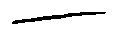 | forward (left to right) | 3 × N |
| T |  | upward, slanting right | very short |
| D |  | upward, slanting right | 3 × T |
So you now have three directions: S, F, and V curve down, N and M run forward, and T and D go up. Direction tells a curve from a forward line from an upward line. Length tells the two letters in each pair apart.
Rule one still applies
Write what you hear. In knee the k is silent, so it's n-e. In made and date the final e is silent.[1]
The sixteen words
These outlines come from the 1968 textbook.[1] Watch where each circle sits against a straight line. In me and name it hangs below the forward stroke. In eat and date it sits on the left of the upstroke. Copy the book's placement for now. The book gives no general rule for it in these units.


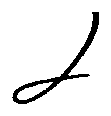

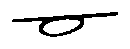
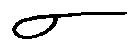
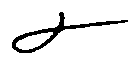
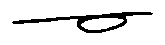


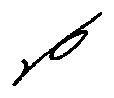
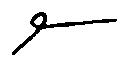
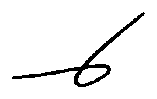
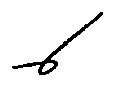
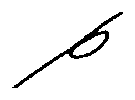
Study it the book's way (5 minutes)
- Read the list aloud with the words showing: "name, n-a-m."
- Cover the words. Spell each outline, then say the word. Peek after a few seconds.
- Write the whole list once, saying each word. Do two or three passes, and never a full line of one word.
Write, then check
Write each word on paper, then open it to compare.
Write name, then open
Write eat, then open
Write same, then open
Write need, then open
Write vain, then open
Write date, then open
Write safe, then open

Write easy, then open

Tomorrow
Read the outlines above with the words covered before you look at anything new.
Read the source
Gregg Notehand, 2nd ed. (1968), Unit 2 ¶9–10 and Unit 3 ¶11–12, book pages 16–17. The book has more words than this lesson: sane, may, mean, seem, fame, seat, stay, tame, stain, aid, seed, deed, feed, saved, stayed. Read them as extra practice. Stop at ¶13 (capitalization), which is Lesson 3.
[1] Leslie, Zoubek & Deese, Gregg Notehand, 2nd ed., McGraw-Hill, 1968, ¶9–12. Outline images are cropped from the book.
Quiz
Score: 0 / 0 · 0 of 31 answered
The quizzes mix Lesson 1 words in with the new ones, so you also tell curves from lines.
Which strokes write knee?
The k is silent.
Which strokes write made?
The final e is silent.
Which strokes write date?
The final e is silent.
Which strokes write team?
The ea sounds like e.
Which strokes write main?
The i is silent.
Which stroke is this?
Short, forward.
Which stroke is this?
Long, forward.
Which stroke is this?
Short, upward.
Which stroke is this?
Long, upward.
Which stroke is this?

A downward curve, mid-sized.
Which stroke is this?
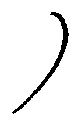
A downward curve, long. D is straight.
Which word is this outline?
n-e. Short forward line.
Which word is this outline?
m-e. Long forward line.
Which word is this outline?
s-e-n.
Which word is this outline?
v-a-n.
Which word is this outline?
n-a-m. Short line first.
Which word is this outline?
m-a-n. Long line first.
Which word is this outline?
a-m.
Which word is this outline?
s-a-m.
Which word is this outline?
e-t. The circle comes first.
Which word is this outline?
t-e. The upstroke comes first.
Which word is this outline?
n-e-t. Short upstroke.
Which word is this outline?
n-e-d. Long upstroke.
Which word is this outline?
t-e-m.
Which word is this outline?
m-a-d.
Which word is this outline?
d-a-t.
Which word is this outline?
s-t-a-t.
Which word is this outline?

Lesson 1: f-a-s.
Which word is this outline?
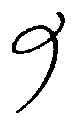
Lesson 1: s-a-v.
Which word is this outline?
Lesson 1: e-s-e.
Which word is this outline?

Lesson 1: f-e.
Take this lesson home
Scan the code or type the link to work through the lesson and its quiz at your own pace.
Your answers are saved only in this browser, so you can pick up where you left off.