Gregg Notehand: shorthand for your own notesLesson 1about 15 minutes
Curves and circles
Three strokes, two circles, fourteen words.
Rule one: write what you hear
Notehand records sounds, not spelling. You drop silent letters and write each sound you actually hear.[1]
| Word | You hear | You write | Why |
|---|---|---|---|
| say | s, a | s-a | The y is silent. |
| face | f, a, s | f-a-s | The c sounds like s. The final e is silent. |
| saves | s, a, v, z | s-a-v-s | The s stroke also covers the z sound. |
| easy | e, s, e | e-s-e | The y sounds like e. |
Three curves, one shape
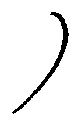
S, F, and V are the same downward curve in three sizes. S is comma-sized. F is about three times as big as S. V is about twice as big as F.[1] Size is the only difference between them, so keep it consistent.


Two circles
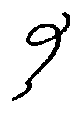
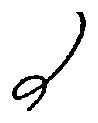
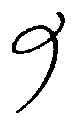
A is a large circle. E is a tiny one.[1] The book's instruction is "Always make the e circle small, tiny in fact, and the a circle large."


The fourteen words
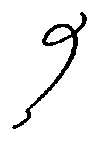
These outlines come straight from the 1968 textbook.[1] Notice where each circle sits: inside the curve, on its hollow side. Copy that placement. The arrow on ace shows the writing direction.




Study it the book's way (5 minutes)
- Read down the list above, saying each word and its spelling aloud: "face, f-a-s."
- Cover the words with a card. Read each outline, spelling it first and then saying the word. Peek if a word doesn't come within a few seconds.
- On paper, write the whole list once, saying each word as you write it. Do two or three passes.
Never fill a line with one word. The book calls that "the least efficient way to learn the words."[1] Use a ballpoint pen, as the book recommends.
Write, then check
Write each word on paper first. Then open it to compare your outline with the book's.
Write safe, then open
Write ease, then open
Write saves, then open
Write fee, then open
Write vase, then open
Write sees, then open
Tomorrow
Before you start Lesson 2, read the outlines above with the words covered, without reviewing first. Recalling after a day's gap builds the long-term memory you need. Re-reading only feels like it does.
Read the source
Gregg Notehand, 2nd edition (1968), Unit 2, paragraphs 1–8, book pages 13–15. Stop at paragraph 9 (N), which is Lesson 2.
[1] Leslie, Zoubek & Deese, Gregg Notehand, 2nd ed., McGraw-Hill, 1968, Unit 2, ¶1–8. Outline images are cropped from the book.
Quiz
Score: 0 / 0 · 0 of 23 answered
Work from memory. Your first click on each question is the one that counts.
Which strokes write face?
The c sounds like s, and the final e is silent.
Which strokes write easy?
The y sounds like e.
Which strokes write saves?
The final z sound is written with s.
Which strokes write vase?
There is no separate z stroke. S covers it.
Which strokes write say?
The y is silent.
Which stroke is this? Judge by size: the outline is at the book's true scale.
Comma-sized.
Which stroke is this? Judge by size: the outline is at the book's true scale.
About three times S.
Which stroke is this? Judge by size: the outline is at the book's true scale.
About twice F.
Which stroke is this? Judge by size: the outline is at the book's true scale.
Large circle.
Which stroke is this? Judge by size: the outline is at the book's true scale.
Tiny circle.
Which word is this outline?
s-a.
Which word is this outline?
f-a-s. F is mid-sized.
Which word is this outline?
v-a-s. The long curve is V.
Which word is this outline?
s-a-f. Compare its tail with save.
Which word is this outline?
s-a-v. The longer tail is V.
Which word is this outline?
s-a-v-s.
Which word is this outline?
s-a-f-s.
Which word is this outline?
s-e. The circle is tiny.
Which word is this outline?
f-e.
Which word is this outline?
f-e-s.
Which word is this outline?
e-s. The tiny circle comes first.
Which word is this outline?
e-s-e.
Which word is this outline?
a-s. The large circle comes first.
Take this lesson home
Scan the code or type the link to work through the lesson and its quiz at your own pace.
buildswithmorgan.com/learn/gregg-shorthand/curves-and-circles/
Your answers are saved only in this browser, so you can pick up where you left off.