Review
A mix of questions from the lessons you've finished. Come back now and then to keep them fresh.
You haven't finished any lessons yet. A lesson counts once you've answered every question in its quiz.
Review questions
These answers are practice: they aren't saved and don't change your lesson progress.
Two people agree to make out. One assumes that agreement covers sex.
Specific. A yes covers the act agreed to, not the next one.
A buyer signs after the seller threatens to spread rumors that the buyer is a cheat.
Voluntary. This is menace: a threat of injury to character (Civil Code 1570).
Someone agrees to sex only with a condom. The partner removes it without saying so.
Informed. The yes was given to a different act than the one that happened. FRIES uses this exact example.
A person who cannot stand up without help slurs "sure."
Capacity. The legal question is not whether they drank but whether they could "understand the fact, nature, or extent of the sexual activity" (Education Code 67386(a)(4)(B)). Someone this impaired likely cannot, so the "sure" does not count.
A spouse never asks, because "we're married." The other spouse says nothing.
Expressed. Silence is not consent, and marriage alone does not constitute consent (Penal Code 261.6).
A caregiver who manages an elderly man's money presses him to sign his house over to her.
Voluntary. This is undue influence: using a position of trust to gain an unfair advantage (Civil Code 1575).
Editing check. Which sentence describes consent under California's affirmative standard?
The second. The first treats silence as consent, and the third treats a relationship as consent. The fourth is subtler. The 2022 Model Penal Code allows consent "inferred from behavior," but the affirmative standard does not rely on inference. Lesson 2 covers this split (ALI Adviser).
Consent is willingness, and it can be read from inaction in context.
Inferred. MPC 213.0(2)(e)(ii): "inferred from behavior—both action and inaction."
Each person is responsible for making sure the other has agreed.
Affirmative. Ed. Code 67386(a)(1) puts this duty on "each person involved."
Without force or serious threats, there is no crime.
Force. The 1962 Model Penal Code required force or threats.
A free but reluctant "okay" is not enough.
Enthusiastic. It asks whether the person wants it, not only whether they agreed.
Consent stands until someone says no.
Refusal. "No means no" puts the duty to object on the person who does not want sex.
Editing check. Which word reports something the character communicated?
"Agreed." The other three describe a state of mind, which the narrator or another character must infer.
Editing check. What does "She went along with it" describe?
Acquiescence. The phrase reports compliance, not agreement or desire.
Over months, a partner controls the money, tracks her phone, and cuts off her friends.
Coercive control. A pattern that interferes with "free will and personal liberty" (Family Code 6320(c)).
One partner asks again and again all evening until the other gives in.
Sexual coercion. Being "worn down" by repeated asking is one of the Office on Women's Health's examples.
In a dark room, someone pretends to be the victim's boyfriend.
Deception, specifically impersonation (PC 261(a)(5); MPC 213.5). This fails Informed, not Voluntary.
"Sign the contract or I'll tell everyone you're a fraud."
Menace. Under Civil Code 1570 it includes a threat "of injury to the character" of the person.
A trusted financial advisor steers an elderly client into signing over her savings.
Undue influence. A position of trust is used for "an unfair advantage" (Civil Code 1575).
In California rape law, this term means an implied threat of retribution strong enough to coerce a reasonable person, judged partly by the victim's age and relationship to the defendant.
Duress, in the Penal Code 261(b) sense.
Editing check. Which statement is accurate?
The second. Civil Code 1569 is about confinement. Penal Code 261(b) is about threats.
Editing check. A character's husband has tracked her location and controlled her bank account for years. Which phrase is most precise?
A pattern of coercive control. The behavior is ongoing, and it matches Family Code 6320(c)(3).
A 16-year-old says an enthusiastic yes.
Age. Under 18 in California (Penal Code 261.5).
A person is passing in and out of consciousness.
State, a temporary one (MPC 213.3(2)(ii)).
A parole agent and the parolee the agent supervises.
Position. Consent "is not a defense" (Penal Code 289.6).
A developmental disability keeps a person from understanding the nature of the act.
Condition. The test is understanding, not diagnosis (Penal Code 261(a)(1)).
A marriage and family therapist and a current client.
Position. Bus. & Prof. Code 729, with MFTs covered under 728.
Someone has been drinking but is following the conversation, speaking clearly, and making choices. They are:
Intoxicated is not incapacitated (UC SVSH Policy). Keep watching, since that can change.
A 17-year-old's gym contract is:
Voidable. The minor can disaffirm it (Family Code 6710).
Editing check. What is California's test for incapacitation by alcohol?
Understanding "the fact, nature, or extent of the sexual activity" (Ed. Code 67386(a)(4)(B)).
"We do this every Saturday, so I didn't ask."
Sexual precedent: treating past sex as consent to future sex (Willis & Jozkowski 2019).
Before starting, they agree that "red" means stop at once.
Exit condition. Agreed in advance (Kukla 2018).
"I'd love to stay over tonight, if you'd like that too."
Invitation. It opens a possibility without pressing for an answer.
Partway through: "Still feel good?"
Check-in. It renews consent while the act is happening.
In Humphreys (2007), as the fictional couple's history grew, readers judged the same ambiguous scene as:
More consensual, as well as more acceptable and clearer.
Editing check. Which sentence does not present history as consent?
The third. The others rely on precedent or marriage, which the law says is not consent.
Which pieces can never move from their place?
The six centres are bolted to the core. They spin in place but never travel or swap, so their colours are fixed addresses.
A bare letter, such as D, means a quarter turn clockwise. Clockwise as seen from where?
Clockwise from outside the cube, looking directly at that face. That is why D looks anticlockwise from where you sit.
What does R2 mean?
The 2 means a half turn. Direction is irrelevant for a half turn.
How do you undo R U?
Reverse the order and flip every direction. Socks then shoes; shoes off, then socks off.
How many different moves does the notation have?
Six letters, each plain, primed or doubled, makes eighteen moves. Every algorithm in the course is a string of them.
Where does the white-green edge belong?
Its colours are its address. Exactly one slot touches both the white and the green centres.
Why is there no white-yellow edge?
Opposite colours sit on opposite sides of the cube, so no single piece reaches both.
How many corners does a cube have, and why?
A corner takes white or yellow, green or blue, and red or orange. That is 2 × 2 × 2 = 8.
A corner sits in its own slot, but its white sticker points sideways. What state is it in?
Right slot, wrong way round. Position and orientation are separate questions.
How many repetitions of R U R' U' return a cube to where it started?
Six repetitions in total bring the cube back. You can undo the sequence by going forward until it comes round.
When is the white cross finished?
Four white stickers can form a cross with every piece in the wrong slot. Each edge's second colour must match its centre too.
How do you hold the cube while you build the cross?
Yellow centre up, white centre down. You build the daisy on top and drop each edge to the bottom.
A white edge sits on top, white up, its side colour above the matching centre. What do you do?
A half turn drops it into the cross, the right way round. A face turn never moves a sticker off that face.
Why can a drop never break a cross edge you have already finished?
The drop only moves UF and DF on that face, and DF is the home of the piece you are putting there.
What is the daisy?
A yellow centre with four white petals. Getting all four white edges there is Phase A; dropping them is Phase B.
With the cube held white down, what does R U R' U' leave alone?
It touches the top layer, the bottom-front-right corner and the front-right middle edge. The rest of the first layer is never disturbed.
The white corner is directly above its slot with white pointing right. How many repetitions does it need?
One. It is already in the orientation the slot wants. Up needs three, and pointing at you needs five.
How many repetitions can it take to seat a corner?
Only ever one, three or five, never two or four. That follows from the sequence's cycle of six.
The white sticker points at you. Which sequence seats the corner in one go?
Inverting the opener splits the cases. The inverse seats a front-pointing corner in one repetition instead of five.
A white corner is stuck in the wrong bottom slot. What do you do?
One repetition ejects it into the top layer. Then it is an ordinary case.
Which top-layer edges belong in the middle layer?
With white already down, a middle edge is any edge showing no yellow. An edge with yellow belongs in the last layer.
You lined up the edge's front sticker with the front centre. Its top sticker matches the right centre. Which insert?
The top sticker names the side the edge belongs to. Right centre, right insert.
What is the first half of the right insert, U R U' R'?
Reverse the opener and flip every direction. It lifts the bottom-front-right corner out and opens the column.
How do you get the left insert from the right one?
The left insert is the right insert in a mirror, so it is one thing to learn, not two.
A middle edge sits in its slot the wrong way round. What do you do?
Same answer as the stuck corner. Get it out first. It becomes an ordinary case in the top layer.
How many top edges can show yellow when you start this step?
Every legal turn flips an even number of edges, so one or three yellow edges up is unreachable.
What is F · R U R' U' · F'?
It is a conjugate, written A B A'. Wrap, act, unwrap.
You see an L of two yellow edges. How do you hold it before you run the algorithm?
Turn U until the two yellow edges point back and left, then run it once to get a line.
You see a line. Which way must it lie?
Left to right. Held front to back, the same algorithm sends you all the way back to a dot.
What is the most times you need to run the algorithm in this step?
Dot takes three runs, L two, line one.
Why is there no algorithm that swaps exactly two top edges and nothing else?
A swap of two is an odd permutation, and the edges and corners always share parity. The smallest edge-only tool is a three-cycle.
What is R U R' U R U2 R' made of?
Lift the right column, turn the top, put it back. Twice, with a different top turn each time.
Which top edge does Sune leave alone?
The front edge sits it out. Left, right and back cycle round.
Exactly one edge matches its centre. How do you bring it to the front?
Rotate the whole cube with y, not U. U would move the edge out of its match.
The edge that belongs on the right is at the back. How many times do you run the sequence?
On the left, once. At the back, twice.
When is a top corner home in this step?
Position only. A home corner with yellow facing sideways is fine; Lesson 9 fixes the twist.
The top edges are placed. How do you change which corner is at the front now?
A U turn would break the placed edges, so only y, a turn of the whole cube.
What is a commutator?
[A, B] = A B A' B'. What changes is exactly where A and B interfere.
In U R U' L' U R' U' L, what are A and B?
A = U R U' and B = L'. Then A B A' B'. A is itself a conjugate.
How many times must you run the sequence to bring any position back to where it started?
Its order is three. That is why running it twice sends the ring the other way.
How do you hold the cube for this step?
Flip it over. The twisted corner goes in the slot you worked in Lesson 4.
The yellow sticker faces right. How many runs of the opener?
Twice. Facing you takes four, because it is two runs further away.
The next twisted corner needs to come to the bottom front right. How do you bring it there?
Turn D, never y. A y rotation carries the half-finished white layers away with it, and the cube does not come back.
After your first corner, the white layers look scrambled. What should you do?
The mess is undone by the runs on the remaining corners. Your runs always add up to 6 or 12, and six runs bring the cube back.
How many corners can be twisted at the start of this step?
The twists of all eight corners always add up to whole turns, so a single twisted corner cannot happen.
Which instrument is fed by the pitot tube?
The airspeed indicator is the only one. It compares pitot pressure against static pressure. The VSI and the altimeter see static pressure alone.
The static port is completely blocked. How many of the three pitot-static instruments are now giving you bad information?
All three share the static line, so all three are affected. The altimeter freezes, the VSI falls to zero, and the airspeed indicator reads wrong in any climb or descent because half of its pressure comparison is now stale.
Your altimeter and VSI agree with what you see outside, but the airspeed indication makes no sense. Where is the problem?
Two instruments on the static line are behaving, so the static line is fine. That leaves the only source the airspeed indicator does not share with them.
Your attitude indicator and heading indicator have both failed. What does that tell you about the pitot-static system?
Those two are gyroscopic instruments, driven by the vacuum pump. They are a separate system entirely. That failure points at the vacuum pump, and it leaves the pitot-static instruments as your cross-check rather than the reverse.
Your static port plugs at 6,000 ft. You descend to 4,000 ft holding a genuine 90 knots. What does the airspeed indicator show?
Below the blockage altitude the outside pressure is higher than the trapped sample, so the instrument subtracts too little and reads high. This is the dangerous direction: it tempts you to slow down on the approach.
Same blockage at 6,000 ft. You climb to 8,000 ft at a genuine 90 knots. What does the airspeed indicator show?
Above the blockage the outside pressure has fallen below the trapped sample, so the instrument subtracts too much and reads low. Less immediately dangerous, because it pushes you toward flying faster.
Why does the VSI settle on zero when the static port blocks, rather than freezing at whatever rate it was showing?
The VSI displays the rate at which static pressure is changing. A sealed line has a constant pressure, so the calibrated leak equalises and the needle falls to zero. The altimeter freezes, but the VSI returns to centre.
You pull the alternate static source. Which way do the indications move?
Cabin pressure sits slightly below outside pressure, and a lower static pressure means a higher indication on both the altimeter and the airspeed indicator. Apply the POH correction and the cabin configuration it assumes.
Your altimeter is frozen but the airspeed still looks completely reasonable. What is the most likely explanation?
With a blocked static port the airspeed error is driven entirely by how far you are from the blockage altitude. Sitting at that altitude, the airspeed is correct. It goes wrong the moment you climb or descend, which is exactly when you stop watching it.
A wasp nest plugs the ram inlet on the ground but the drain hole stays clear. What does the airspeed indicator do during the takeoff roll?
The drain vents the pitot line to ambient, so the diaphragm sees the same pressure on both sides and never deflects. This is the failure the "airspeed alive" call is designed to catch.
Ice seals both the ram inlet and the drain hole at 3,000 ft. You climb to 7,000 ft holding a genuine 100 knots. What do you see?
The trapped total pressure is fixed while the live static pressure falls with altitude. The subtraction grows, so the needle rises. This is the case that tempts you to pitch up until you stall.
With the pitot tube fully blocked, what happens to the altimeter and VSI?
Neither is connected to the pitot line. They remain your reliable reference, which is what lets you identify the failure as a pitot problem in the first place.
You turn on pitot heat and the airspeed indication comes back. What was the blockage almost certainly caused by?
Heat only removes ice. If heat fixes it, it was ice. If heat does nothing, suspect an obstruction that will still be there on landing, and tell maintenance.
Airspeed reads low in a climb and high in a descent, while the altimeter is frozen. Which line is blocked?
The frozen altimeter settles it on its own. The airspeed direction confirms it: a blocked static reads low in a climb, which is the opposite of a blocked pitot.
Which strokes write face?
The c sounds like s, and the final e is silent.
Which strokes write easy?
The y sounds like e.
Which strokes write saves?
The final z sound is written with s.
Which strokes write vase?
There is no separate z stroke. S covers it.
Which strokes write say?
The y is silent.
Which stroke is this? Judge by size: the outline is at the book's true scale.

Comma-sized.
Which stroke is this? Judge by size: the outline is at the book's true scale.

About three times S.
Which stroke is this? Judge by size: the outline is at the book's true scale.
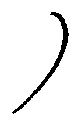
About twice F.
Which stroke is this? Judge by size: the outline is at the book's true scale.

Large circle.
Which stroke is this? Judge by size: the outline is at the book's true scale.

Tiny circle.
Which word is this outline?

s-a.
Which word is this outline?

f-a-s. F is mid-sized.
Which word is this outline?
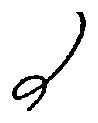
v-a-s. The long curve is V.
Which word is this outline?

s-a-f. Compare its tail with save.
Which word is this outline?
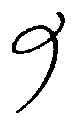
s-a-v. The longer tail is V.
Which word is this outline?
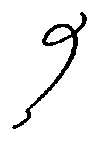
s-a-v-s.
Which word is this outline?
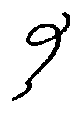
s-a-f-s.
Which word is this outline?

s-e. The circle is tiny.
Which word is this outline?

f-e.
Which word is this outline?

f-e-s.
Which word is this outline?

e-s. The tiny circle comes first.
Which word is this outline?

e-s-e.
Which word is this outline?

a-s. The large circle comes first.
Which strokes write knee?
The k is silent.
Which strokes write made?
The final e is silent.
Which strokes write date?
The final e is silent.
Which strokes write team?
The ea sounds like e.
Which strokes write main?
The i is silent.
Which stroke is this?

Short, forward.
Which stroke is this?
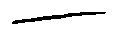
Long, forward.
Which stroke is this?

Short, upward.
Which stroke is this?

Long, upward.
Which stroke is this?
A downward curve, mid-sized.
Which stroke is this?
A downward curve, long. D is straight.
Which word is this outline?

n-e. Short forward line.
Which word is this outline?
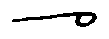
m-e. Long forward line.
Which word is this outline?

s-e-n.
Which word is this outline?
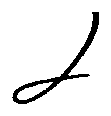
v-a-n.
Which word is this outline?
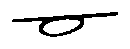
n-a-m. Short line first.
Which word is this outline?
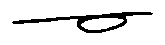
m-a-n. Long line first.
Which word is this outline?
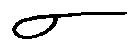
a-m.
Which word is this outline?
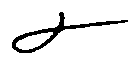
s-a-m.
Which word is this outline?

e-t. The circle comes first.
Which word is this outline?

t-e. The upstroke comes first.
Which word is this outline?

n-e-t. Short upstroke.
Which word is this outline?
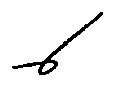
n-e-d. Long upstroke.
Which word is this outline?
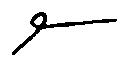
t-e-m.
Which word is this outline?
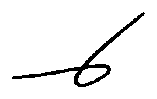
m-a-d.
Which word is this outline?
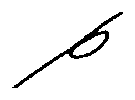
d-a-t.
Which word is this outline?
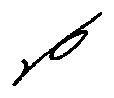
s-t-a-t.
Which word is this outline?
Lesson 1: f-a-s.
Which word is this outline?
Lesson 1: s-a-v.
Which word is this outline?
Lesson 1: e-s-e.
Which word is this outline?
Lesson 1: f-e.
Your answers are saved only in this browser, so you can pick up where you left off.